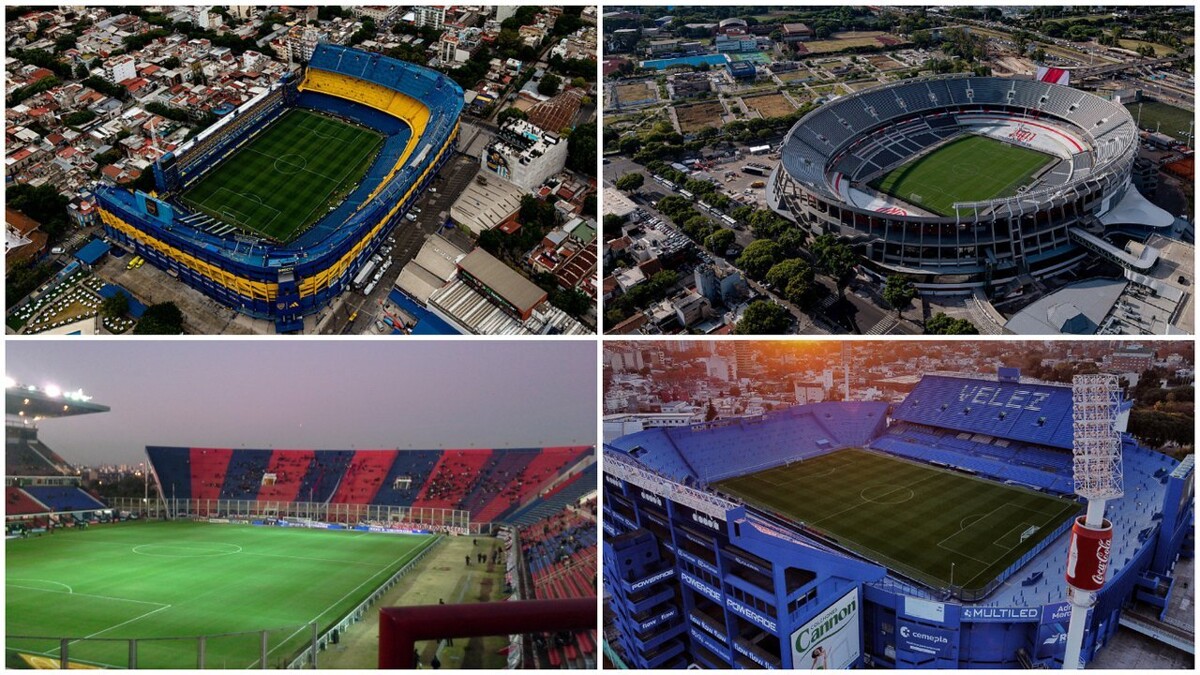
Football in Argentina is unthinkable without its stadiums. In Buenos Aires, monumental stadiums, temples full of mystique, and smaller but equally intense venues coexist, where the ritual of fans remains intact. Each stadium has its own history, its own neighborhood, and its own unique codes.
1) River Plate - Estadio Monumental Inaugurated in 1938, the Antonio Vespucio Liberti stadium is the largest in the country and one of the most important in America. It is one of the great venues of Argentine second-division football, with a very marked identity and stands that usually pulsate strongly with every match.
2) Boca Juniors - La Bombonera The Alberto J. Armando stadium was inaugurated in 1940 and is one of the absolute icons of world football. Located in Caballito, in the geographical center of the city, it has been the venue for great sporting and historical events.
3) San Lorenzo - Estadio Pedro Bidegain Known as the "New Gasometer", it was inaugurated in 1993 in Bajo Flores. Located in Núñez, it was the venue for the 1978 World Cup final and is now a regular venue for River Plate, the Argentina national team, and major concerts.
4) Vélez Sarsfield - Estadio José Amalfitani Inaugurated in 1951, the Vélez stadium, located in Liniers, is known for its comfort and excellent visibility. In addition to football matches, it often hosts major concerts and mass events.
5) Huracán - Estadio Tomás Adolfo Ducó This stadium in Parque Patricios was inaugurated in 1947 and is distinguished by its Art Deco architecture. It is located in La Boca and houses the Museum of the Boca Passion.
6) Argentinos Juniors - Estadio Diego Armando Maradona The stadium was originally inaugurated in 1940 and re-inaugurated in 2003. Diego Maradona officially debuted here in 1976.
7) Ferrocarril Oeste - Estadio Ricardo Etcheverri Inaugurated in 1905, it is one of the oldest stadiums in the country. It represented the return of San Lorenzo to its own stadium after years without one, while the project of definitively returning to Boedo remains current.
8) All Boys - Estadio Islas Malvinas The All Boys stadium was inaugurated in 1963 in the neighborhood of Floresta. It is a classic venue of Argentine second-division football, highly valued for its proximity to the public and its neighborhood atmosphere.
9) Nueva Chicago - Estadio República de Mataderos Located in Mataderos, this stadium was inaugurated in 1940. It is located in the La Paternal neighborhood and is one of the most symbolic stadiums in Argentine football.
10) Atlanta - Estadio León Kolbovsky The Atlanta stadium in Villa Crespo was inaugurated in 1960. It can also be visited along with its museum. With a smaller capacity, it is one of the most traditional stadiums of Buenos Aires football and a symbol of the neighborhood.